I’m not scared of relationships, I’m scared of making a shift from friends to more than friends.
I’m not scared of going out to eat, I’m scared of breaking my streak of home cooked meals.
I’m not scared of moving on, I’m scared of re-establishing myself on new ground.
When trying to dissect exactly what it is about change that is so scary I’ve come to a couple of conclusions (all idiosyncratic to my own personality and emotional history- so, as usual, I cannot speak on behalf everyone suffering from obsessive compulsive disorder); but if I had to pinpoint the sole problem I have with change that I think would most resonate with other OCD sufferers then it would be how in a ritualistic mind change can imitate an intrinsic kind of susceptibility.
To physically change my placement or what I surround myself with, to literally and figuratively put myself out there in an unfamiliar situation with unfamiliar factors is to open myself to a universe of possibilities I have no practice in handling. I cannot guarantee I know how my personality will handle new and different experiences and to somebody who is constantly trying to decode the intermingling of their identity with their mental illness this is nothing short of terrifying.
Equating susceptibility on an identity level is developmentally crippling. Any kind of milestone, an experience or event that should be cherished, could easily be seen with a negative connotation (hence the examples of misconception that I’m simply afraid of being in a relationship, eating at a restaurant, or moving out into a new environment). This kind of mindset is not fulfilling and that’s not fair.
In my OCD fight I’m going to consciously equate change with a more positive connotation- one of growth and blooming. One where getting to the next level, transitioning, and graduating into new milestones will be viewed like pouring water on a blooming identity, to further discover what kind of beautiful flower it will be rather than suppressing it to a bud or a stem without its floral crown.

Change will nourish you, not hurt you. And unfamiliarity forces you to become more familiar with your identity by shedding light on how you handle certain experiences. Growth helps you become a more complete you. Making your identity susceptible to growth should be seen as making yourself available to a new level of beauty that only life experience can elicit.
Change welcomes susceptibility, but susceptibility welcomes growth.
– Valerie Parente (5-24-16)




 I correct people’s grammar. I criticize poorly worded sentences in commercials. I cringe at ridiculous lyrics sung on the radio. I proofread my text messages before sending them. But I think the reason language is important to me is because so often I have a jumble of irrational snippets of information and lacerated thoughts senselessly flying around my head. So to be able to pull that structureless jumble outside of my own head and construct it into coherent sentences is a big deal for me. To be able to put into words what doesn’t quite make sense to me is nothing short of a miracle.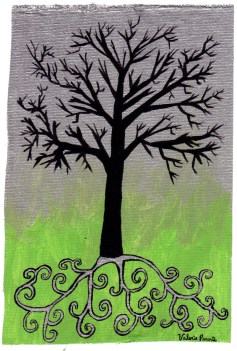

 valerieparente